How to get attendees to risk doing something new at your event
 Getting your attendees to do something new at your event can be hard. For example, Seth Godin illustrates the problem:
“Want to go visit a nudist colony?”
“I don’t know, what’s it like?”
“You know, a lot of people not wearing clothes.”
“Show me some pictures, then I’ll know.”
Well, actually, you won’t.
You won’t know what it’s like merely by looking at a picture of a bunch of naked people.
The only way you’ll know what it’s like is if you get seen by a bunch of naked people. The only way to have the experience is to have the experience.
Not by looking at the experience.
By having it.
—Seth Godin, Experiences and your fear of engagement
Now you’re probably not taking your attendees to a nudist colony for the first time. (Nudist associations, I did say probably.) But introducing a new event format where an attendee has to do something different, like interact with other attendees or play a game, will usually evoke uncomfortable feelings for some or many attendees, ranging from mild unease to outright fear.
So how can we encourage attendees to take the risk to try something new?
By having them do something new together.
A caveat — allow attendees to opt-out
Whatever we are asking attendees to do, it’s important to always provide an option for individuals to opt out. How to do this depends on the circumstances. For example, running an activity as a concurrent breakout or an add-on to the main program implies that participation is optional. But if the activity is a plenary session, then you should always give an opt-out provision after introducing the activity and before participation starts.
(This doesn’t mean that attendees necessarily get to pick and choose how they will be involved with the activity. For example, when I run The Solution Room I make it clear that those present who choose to attend can do so only as participants and not as observers. If they choose not to participate, I ask them to skip the session.)
Strong scientific research performed over fifty years ago has shown that groups are more likely to accept taking risks than the members individually (e.g. see diffusion of responsibility and level of risk-taking in groups for supporting research). Seasoned facilitators know this. Working with groups we can routinely get members to do things collectively that they might balk at as individuals.
Simply asking a group to do something perceived as risky is not all that’s required, however. Supplying or obtaining agreements on how the group members will work together helps create a safe(r) working environment for risk-taking. In addition, if the group members are mostly strangers to each other, it can be helpful to provide appropriate and meaningful activities for them to get to know each other before moving into new kinds of work. Finally, begin with low-level risk activities and then move to those perceived as more risky. This will help a group obtain experiences that they would have resisted had I asked them to participate right away.
The power of group process
Change is hard. However, the potential of group process to successfully introduce people to beneficial experiences that might be judged beforehand as scary or risky allows us to create powerful new experiences for attendees at our events. Furthermore, new experiences that incorporate valuable learning and build new personal connections are one of the most powerful ways to make meetings relevant and memorable.
That’s why I love to design and facilitate group work at conferences. I’ll probably never get to facilitate the kind of exposure in Seth Godin’s example (and that’s fine by me). But group work has the power to engage and transform attendee learning and connection in ways that conventional broadcast sessions cannot match. It should be top-of-mind for every event professional who wants to hold engaging and successful meetings.
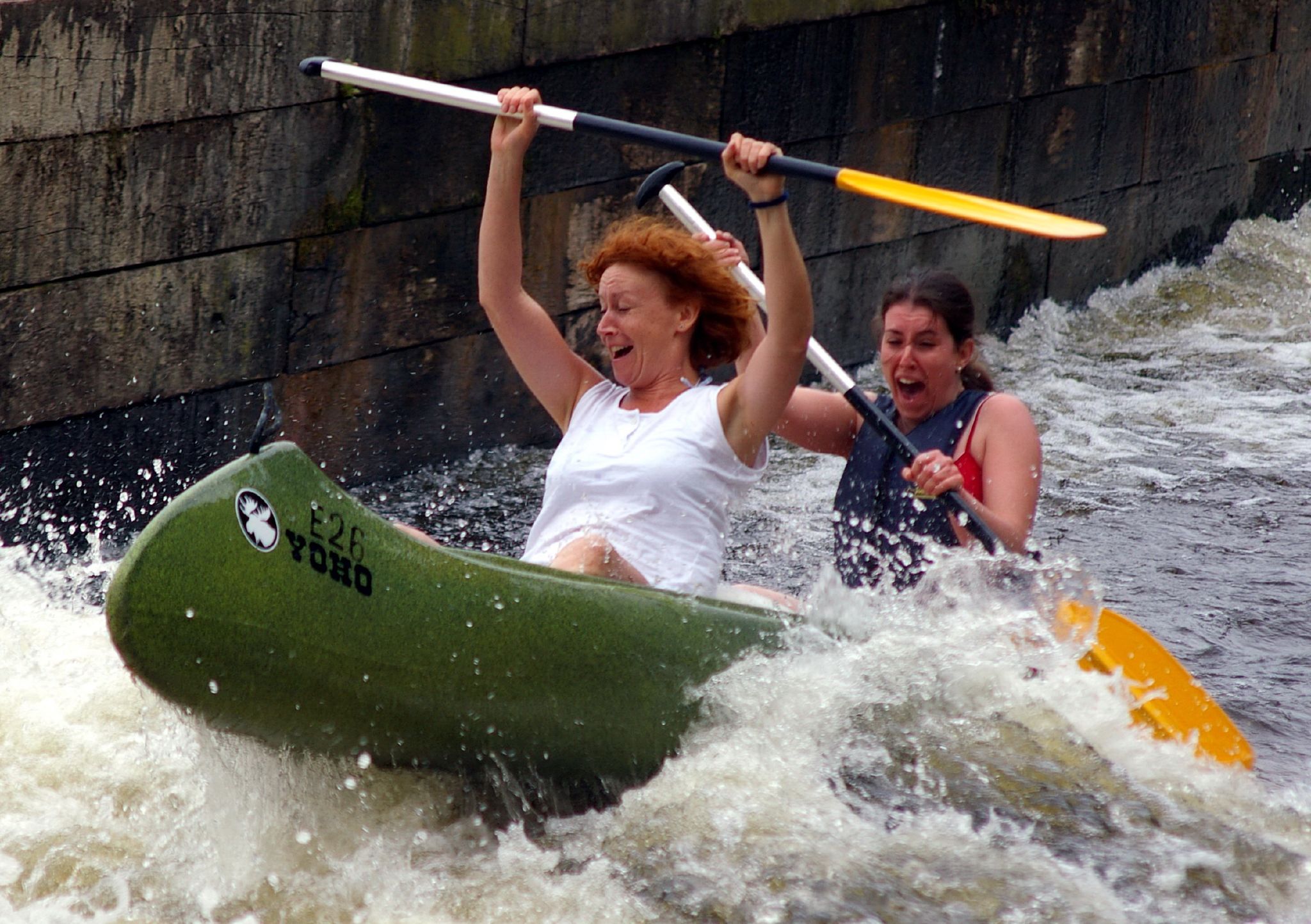
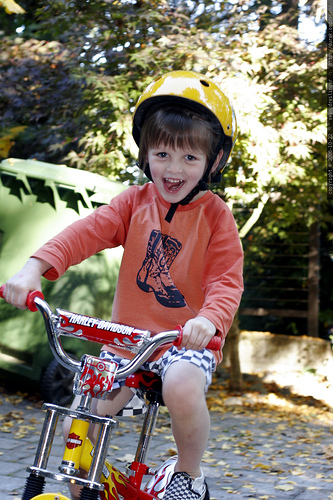
Image attribution: Lyndi & Jason, Dallastown PA, United States [CC BY-SA 2.0], via Wikimedia Commons